A Conversation in Oxford

When Connie and I were in Oxford, England, several years ago, I found myself in conversation with  student from Japan. We were walking the streets among the 43 colleges that make up the university. I called his attention to the spires that rose above the medieval chapels, many of which were topped with crosses.

I asked him if he understood the significance of the crosses. He said that he did not. I asked him if he would like for me to explain the meaning of the crosses. He agreed to that, so we entered a deli, and over sandwiches, I talked with him about Jesus and his death on the cross for our sins. He was attentive and appreciative.

Any discussion of the meaning of Jesus’ death on the cross should emphasize substitution. Jesus died in our place. This is the essence of the gospel. This is clearly the teaching of 2 Corinthians 5:21 — “God made him who had no sin to be sin for us, so that in him we might be made the righteousness of God.”

John Stott summarized 2 Corinthians 5:21. “For our sakes God actually made the sinless Christ to be sin with our sins. The God who refused to reckon our sins to us reckoned them to Christ instead.”

In my conversation with the young man in Oxford, I talked about who it was who died on the cross. He was without sin. Just as in the Hebrew Bible the lamb that was sacrificed on Passover had to be unblemished, so Jesus was the Lamb of God “without blemish or defect” (1 Peter 1:19}. The New Testament emphasizes the perfection of Jesus. He was “the holy and righteous one,” God’s “holy servant.” Jesus asked his enemies, “Can any of you prove me guilty of any sin?” (John 8:46). Paul wrote in 2 Corinthians 5:21 that Jesus “had no sin.”

Our conversation centered on what happened on the cross. “God made him . . . to be sin for us.” We cannot fully understand the depth of meaning in this statement. The morally perfect Son of God was treated as if he were guilty, so that we could be treated as if we were righteous.

Did you ever think about what it must have been like for the holy nature of the Son of God to live among sinners who were selfish, profane, hypocritical, rebellious, deceitful blasphemers? And how terrible it would have been for him to take their sins upon himself?

But this is exactly what the Bible says he did. “This is love, not that we loved God, but that he loved us, and sent his Son as an atoning sacrifice for our sins” (1 John 4:10). “For Christ died for sins once for all, the righteous for the unrighteous, to bring you to God” ( 1 Peter 3:18). “Christ redeemed us from the curse of the law by becoming a curse for us, for it is written, cursed is everyone who hangs on a tree” (Galatians 3:13).

When did this happen? It was when our Lord felt the weight of our sin in the garden of Gethsemane, when darkness shrouded the land as he was dying, and when he cried with a loud voice from the cross, “My God, My God, why have you forsaken me?” It was when God the Father made him to be sin for us.

In this we are made to see God’s sovereignty, his justice, and his grace. He made eternal life possible for all who would believe this message. Jesus was rejected so that we could be accepted. He bore the law’s penalty so that we could be declared “not guilty.” He died so that we could live.

Why did Jesus die on that cross? It was “so that in him we might become the righteousness of God.” This tells us that righteousness is given to those who are “in him.” We receive the gift of righteousness by faith in Christ. “For in the gospel a righteousness from God is revealed, a righteousness which is by faith from first to last” (Romans 1:17). “This righteousness from God comes through faith in Christ to all who believe” (Romans 3:22).

This is the essence of the gospel. That is what we talked about in that deli in Oxford.

Pastor Randy Faulkner


Learning from Spurgeon

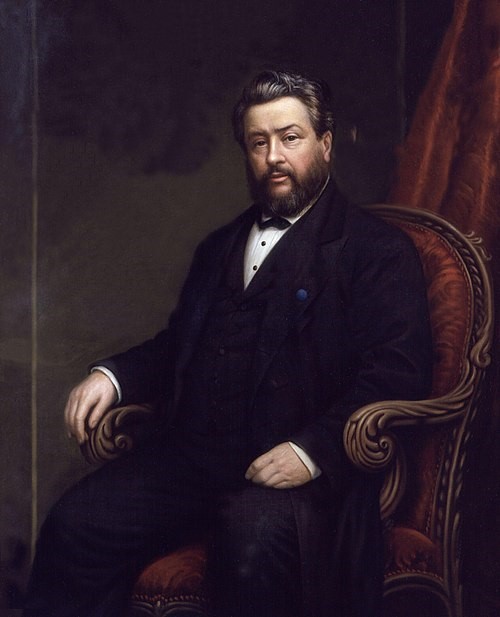
Charles Haddon Spurgeon was known as “the prince of preachers.” He was possibly the most influential Christian pastor in the world in his time (b. 1834-d. 1892). He was the pastor of the Metropolitan Tabernacle (Baptist) of London for 38 years. His preaching attracted large crowds and led many thousands to profess faith in Christ.

Recently, I read a biography of Spurgeon by one of his contemporaries (W. Y. Fullerton). This has inspired me to pass along to you some highlights of his ministry and some of the things I have learned from his example.

He boldly preached the Bible as the inspired word of God. His sermons were saturated with scripture. He had a genius for remembering everything he read. His knowledge of the Bible was encyclopedic and he was able to quote from memory many passages from scripture to support the doctrinal truths he was emphasizing. He said that if his church members were to be pricked, he wanted them to bleed the Bible.

Spurgeon vigorously opposed those who challenged the divine inspiration of the Bible. He denounced the liberalizing trends that he saw creeping into the churches of England from Continental Europe. He saw these trends as undermining the faith of the people and subverting the gospel.

He was an evangelist. Those who are familiar with Spurgeon know that he was a Calvinist who believed in, and preached “particular redemption,” the doctrine that Christ died for the elect, and only for the elect. However he maintained warm friendship with other leaders who disagreed with him on the doctrine of election. His Calvinism did not stop him from offering the good news of salvation through Christ to anyone and everyone. He pursued many means to do that.

Fullerton wrote, “Spurgeon himself ascribed his success not so much to his preaching of the gospel as to the gospel he had to preach. To him it was the truth that prevailed.”

Spurgeon had a city-wide vision for outreach. His sermons were published in newspapers and in best-selling books. He mobilized the people of his congregation to reach out with the gospel with Christian literature, an orphanage, a monthly magazine, a pastor’s college for training men for the ministry, a home for elderly widows, and twenty mission churches situated all over London.

The young pastors he trained were called to serve in many Baptist, and other “free” (non-denominational) churches. Spurgeon was gratified by reports that these congregations were growing and thousands were being led to Christ.

The mission churches started by the Metropolitan Tabernacle were evangelistic stations located in poor and working class districts in London. These missions were a response to the social upheavals caused by the industrial revolution. The urban poor, Spurgeon believed, were a great mission field.

The workers in these ministries were mostly members of the Tabernacle who were inspired by their pastor to seek to win the lost to Christ. He trained the people of his congregation to preach in the open air, to visit the sick, to teach Sunday School, and to share the gospel with individuals, all over London.

What was the secret to his success as a pastor? Fullerton mentions many qualities he had observed in his friend Spurgeon: his faith, his zeal, his courage, the novel style of his preaching, his fidelity to strong doctrine, his love for people, his humility, his natural wit, his hard work, his common sense, and his fluency of speech. But these do not tell the whole story.

Fullerton concludes, “It is the living mixture that produces the result. When, as in Spurgeon’s case, there is added to the great gifts of nature the power of the Spirit of God dwelling within the man, as in a holy temple, who can be surprised at the result?”

Pastor Randy Faulkner

Life After Death

The celebration, last Sunday, of our Lord’s resurrection, is a glorious reminder that for followers of Jesus, death is not a terminus, but a transition. The hope of life after death is not an empty wish. Those who die “in Christ” do not cease to exist, smothered in eternal darkness.

In my years of pastoral ministry I have seen how this assurance has sustained God’s people. I have stood beside countless graves and have read the Bible’s promises of eternal life. Those mourners were blessed with the knowledge that their departed loved ones were “away from the body and at home with the Lord” (2 Corinthians 5:8).

In addition, there are examples in the Bible which illustrate this truth. They lead to the conclusion that death is not extinction. If we accept the Bible as truthful and trustworthy, then we will believe what it says about life after death.

Moses and Elijah

When Jesus took three of his disciples up on a mountain to pray, they had an experience that shattered their perceptions of reality. Jesus’ appearance was transformed. Suddenly his face shone like the sun, his clothes were illuminated, and the prophets Moses and Elijah showed up, talking with Jesus (Matthew 17:1-9).

Other important things happened, but what I want to point out is the matter-of-fact way in which this event is reported. Moses and Elijah were there, even though they had been off this earthly scene for hundreds of years. Yet here they were, recognizable, retaining their identity, talking with Jesus, very much alive.

What were they talking about? Luke’s gospel says they were discussing our Lord’s imminent death (Luke 9:31). It is likely that they understood how the crucifixion of Jesus would fulfill the Law, represented by Moses, and the Prophets, represented by Elijah. Then they were enveloped in a  cloud of glory and were gone.

What are we to make of this? One lesson is that God’s people of the past have continuing, happy existence with God and the scriptures want us to believe it.

Abraham, Isaac, and Jacob

On another occasion, some of Jesus’ detractors who denied the resurrection, challenged him publicly. They spun an elaborate tale designed to make him look ridiculous for believing in the resurrection of the body (Matthew 22:23-33). Jesus answered their crude skepticism by stating that they didn’t understand the scriptures or the power of God.

He quoted Exodus 3:6 as God’s pronouncement: “I am the God of Abraham, the God of Isaac, and the God of Jacob.” He did not say “I was,” but “I am” their God. Then Jesus added, “He is not the God of the dead, but of the living.”

What does Jesus want us to believe? He wants us to believe that Abraham, Isaac, and Jacob are alive, enjoying unbroken fellowship with God. This is a profound argument for life after death.

The rich man and Lazarus

Jesus told a story which was intended to arouse a sense of urgency about preparing for death. The account of the rich man in hell (Luke 16:19-31) reveals a person whose character was shaped by selfishness and greed. He was not in hell because he was rich, but because he failed to prepare for eternity by seeking God’s way of salvation, revealed in the scriptures.

The other person in the story, Lazarus, was in paradise because he was a believer. On earth he was a poor beggar. In heaven, he was rewarded for his faith with eternal happiness and peace at Abraham’s side. Abraham is the supreme biblical example of faith. Lazarus had the faith of Abraham and was associated with him in paradise.

Among other things, what our Lord is teaching is the continuing existence of individuals after death. Some go to the place of punishment, others to the place of comfort and reward.

The message of Jesus’ death and resurrection is good news for those who believe it. He said, “Because I live, you also will live” (John 14:19). The consequences are serious for those who reject it. There is more than one kind of life after death.

Pastor Randy Faulkner


Last Words from the Cross

On this day which is called “Good Friday,” we remember with gratitude what the Lord Jesus did for us in giving his life as a ransom for sinners. We remember what he said as he was dying.

When Jesus called out from the cross, “It is finished,” he was saying farewell to earth. When he said to God, “Father, into your hands I commit my spirit” (Luke 23:46), it was an entrance greeting to heaven. His spirit was to be separated from his body. He had assurance of his spirit’s continuance apart from the body. Those who are in Christ may have that same assurance.

His death was an act of his will. To be sure, he was killed by wicked people (Acts 2:23). But in a deeper sense his death was voluntary. Neither Judas, nor Caiaphas, nor Pilate, nor the soldiers took his life from him. “He gave his life as a ransom for many” (Mark 10:45). No human power could have touched him unless he permitted it. Only when the appointed time had come, did he allow his enemies to arrest him (John 12:23).

He had said to his disciples, “The reason my Father loves me is that I lay down my life — only to take it up again. No one takes it from me, but I lay it down of my own accord. I have authority to lay it down and I have authority to take it up again. This command I received from my Father” (John 10:17-18).

This tells us of the Son of God’s complete agreement with and submission to the Father’s eternal plan of redemption. His resurrection must be preceded by his death. This was the Father’s loving purpose for his obedient Son.

This was not a form of suicide, nor a martyr complex, nor fatalistic resignation. This was his authority to terminate his physical life, and then to resume that physical life in the resurrection. Only the Son of God has that authority. In this he exercised his power over death, to make possible our deliverance from the power of death.

So he “cried out again with a loud voice” (Matthew 27:50), “bowed his head” (John 19:30), and committed his spirit to the Father (Luke 23:46). In one moment he lost consciousness of the terrible scene in front of him and was immediately conscious of being in Paradise, in the presence of the Father. His body was taken down from the cross to be buried by the hands of humans. His spirit was taken into the loving hands of the Father in heaven.

This helps explain the Lord’s earlier words to his disciples, “I came from the Father and entered the world; now I am leaving the world and going back to the Father” (John 16:28). If you and I believe in this Jesus, his word proves as true for us as for them, “The Father himself loves you because you have loved me and have believed that I came from God” (John 16:27).

Pastor Randy Faulkner