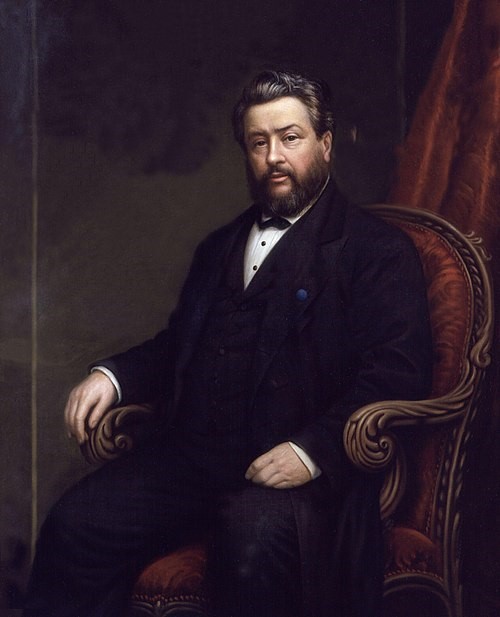
Charles Haddon Spurgeon was known as “the prince of preachers.” He was possibly the most influential Christian pastor in the world in his time (b. 1834-d. 1892). He was the pastor of the Metropolitan Tabernacle (Baptist) of London for 38 years. His preaching attracted large crowds and led many thousands to profess faith in Christ.
Recently, I read a biography of Spurgeon by one of his contemporaries (W. Y. Fullerton). This has inspired me to pass along to you some highlights of his ministry and some of the things I have learned from his example.
He boldly preached the Bible as the inspired word of God. His sermons were saturated with scripture. He had a genius for remembering everything he read. His knowledge of the Bible was encyclopedic and he was able to quote from memory many passages from scripture to support the doctrinal truths he was emphasizing. He said that if his church members were to be pricked, he wanted them to bleed the Bible.
Spurgeon vigorously opposed those who challenged the divine inspiration of the Bible. He denounced the liberalizing trends that he saw creeping into the churches of England from Continental Europe. He saw these trends as undermining the faith of the people and subverting the gospel.
He was an evangelist. Those who are familiar with Spurgeon know that he was a Calvinist who believed in, and preached “particular redemption,” the doctrine that Christ died for the elect, and only for the elect. However he maintained warm friendship with other leaders who disagreed with him on the doctrine of election. His Calvinism did not stop him from offering the good news of salvation through Christ to anyone and everyone. He pursued many means to do that.
Fullerton wrote, “Spurgeon himself ascribed his success not so much to his preaching of the gospel as to the gospel he had to preach. To him it was the truth that prevailed.”
Spurgeon had a city-wide vision for outreach. His sermons were published in newspapers and in best-selling books. He mobilized the people of his congregation to reach out with the gospel with Christian literature, an orphanage, a monthly magazine, a pastor’s college for training men for the ministry, a home for elderly widows, and twenty mission churches situated all over London.
The young pastors he trained were called to serve in many Baptist, and other “free” (non-denominational) churches. Spurgeon was gratified by reports that these congregations were growing and thousands were being led to Christ.
The mission churches started by the Metropolitan Tabernacle were evangelistic stations located in poor and working class districts in London. These missions were a response to the social upheavals caused by the industrial revolution. The urban poor, Spurgeon believed, were a great mission field.
The workers in these ministries were mostly members of the Tabernacle who were inspired by their pastor to seek to win the lost to Christ. He trained the people of his congregation to preach in the open air, to visit the sick, to teach Sunday School, and to share the gospel with individuals, all over London.
What was the secret to his success as a pastor? Fullerton mentions many qualities he had observed in his friend Spurgeon: his faith, his zeal, his courage, the novel style of his preaching, his fidelity to strong doctrine, his love for people, his humility, his natural wit, his hard work, his common sense, and his fluency of speech. But these do not tell the whole story.
Fullerton concludes, “It is the living mixture that produces the result. When, as in Spurgeon’s case, there is added to the great gifts of nature the power of the Spirit of God dwelling within the man, as in a holy temple, who can be surprised at the result?”
Pastor Randy Faulkner