Que Sera,Sera…So Why Pray?

The question is sometimes framed like this: “If God already knows what will happen, if he has a plan and he is in charge, then why pray at all? Whatever will be, will be.” This expresses the age-old tension between divine sovereignty and human responsibility. Thinking about this for too long makes my brain tired.

Tired, or just plain lazy? Is my sinful self just looking for an excuse not to pray? In a startling confession, C.S. Lewis admitted, “Well, let’s now at least come clean. Prayer is irksome. An excuse to omit it is never unwelcome. When it is over, this casts a feeling of relief and holiday over the rest of the day. We are reluctant to begin. We are delighted to finish. While we are at prayer, but not while reading a novel or solving a crossword puzzle, any trifle is enough to distract us” (Letters to Malcomb: Chiefly on Prayer).

He wrote these words while contemplating human selfishness and spiritual weakness. He said, “The truth is, I haven’t any language weak enough to depict the weakness of my spiritual life.” This brazen acknowledgment of his sinfulness seemed shocking until I came around to admitting my own sinful inadequacy in prayer.

The stark truth is that prayer is a battleground and the enemy doesn’t readily yield territory to us mortals. This gets me back to my opening question: why pray? One reason is, in the words of Timothy Keller, prayer is “rebellion against the world’s status quo. Indeed, it is listed as a weapon in spiritual warfare against the forces of darkness (Ephesians 6:12).” We live in a world that is organized against the will of God. Prayer, then, brings our orientation back where it belongs: to God himself.

We pray because of who God is. Prayer forces our minds, and yes, even the posture of our bodies, to come before our Creator in praise, humble confession, thanks and asking for what we need. E.P. Clowney put it this way, “The Bible does not present an art of prayer, it presents the God of prayer.” The more we see and know God for who he is, the more prayer will follow. Our understanding of God shapes our praying.

Then there is the way prayer changes us. Prayer positions us as persons who act as those who are known by and have value to God. Lewis wrote, “The passive changes to active. Instead of merely being known, we show, we tell, we offer ourselves to view. To thus put ourselves on a personal footing with God … we assume the high rank of persons before him.” And by the agency of the Holy Spirit, we are permitted to call God “Abba, Father,” in the most intimate way.

Such awareness, of God, of ourselves, of the world, of the powers of evil and of the nature of prayer itself, all prompt us to pray, and to pray boldly. Jesus illustrated this in a parable. He asked his hearers to imagine a man banging on the door of his neighbor at midnight. He has unexpected guests and no food to offer them.

The neighbor tells him to stop bothering him or he’ll wake up the whole household. He tells him to go away. Then Jesus asks, “Is that really how the neighbor is going to react?” His implied answer is no.

Because the man at the door is bold and persistent, he will indeed get up and give him the bread that he asked for, as much as he needs (Luke 11:5-10). Jesus says this illustrates how we should pray with “shameless audacity.” It is not that God is reluctant to hear and to help. It is that he values the kind of bold desperation described in the story. That is a lesson for me when my prayers are tentative and my faith is weak.

“Ask,” Jesus said. Asking implies a need and a recognition of God’s willingness to meet the need. Ask with audacious persistence. Ask, expecting an answer.

“Seek,” Jesus went on to say. Seek the Father’s will above all else, as Jesus taught us to pray. “Your will be done on earth” is a way of praying as the Lord Jesus prayed. Seeking also means pursuing the will of God in everything else we do.

“Knock,” implies persistence. It is not wrong to keep knocking on the door of heaven. In the language of the New Testament, the present tense of these three verbs implies continuous asking, seeking and knocking. The first verse of Luke 18 says, “Then Jesus told his disciples a parable to show them that they should always pray and not give up.”

Why pray? If we pray for no other reason, the fact that Jesus said it is normal behavior for his followers, makes it a priority. We may not understand fully how our praying fits into the accomplishment of the sovereign will of God. But the fact that he commands us to pray says that it does. Reason enough.

    –  Pastor Randy Faulkner

Contact


A Strategy of Subversion

A Strategy of Subversion

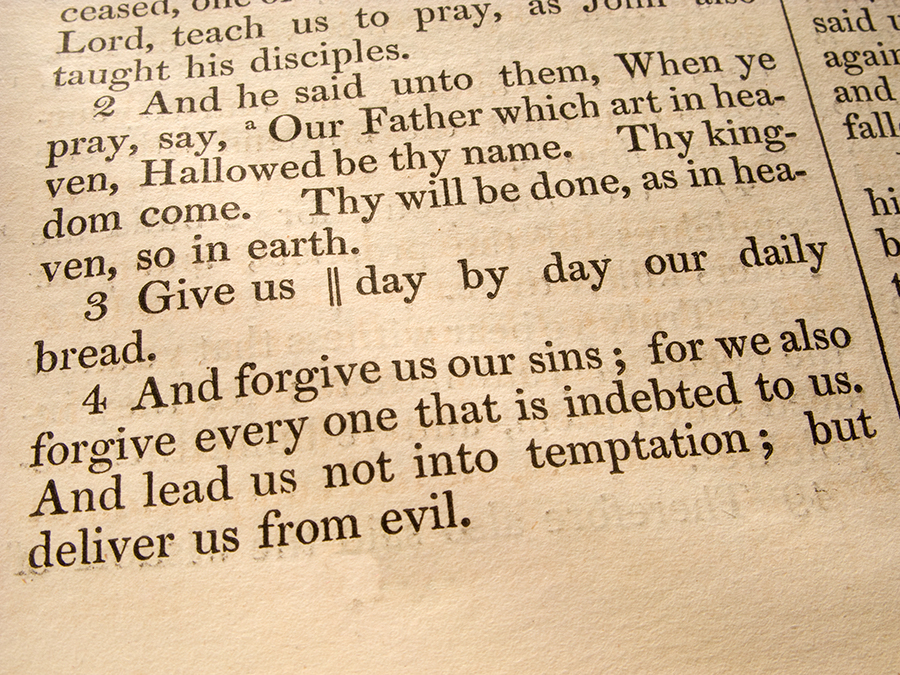
The sermon on the mount was subversive. Our Lord Jesus subverted and re-framed time-honored religious precedents: alms-giving, fasting, public rituals, interpersonal relations, and prayer. The climax of the sermon is the Lord’s Prayer. It is an expression of the desire that God’s kingdom will up-end and replace all earthly authorities, powers, and customs. “Your will be done on earth” (Matthew 6:10).

This is the main idea of Albert Mohler’s book, The Prayer that Turns the World Upside Down: The Lord’s Prayer as a Manifesto (Thomas Nelson, 2018, 175 pp). I read the book on a recent trip. It refreshed and renewed my understanding of the Prayer, in its simplicity and power.

In the introduction, he writes: “Looking across the landscape, it becomes clear that very few revolutions produce what they promise. Arguably most revolutions lead to a worse set of conditions than they replaced. 

And yet, we still yearn for radical change, for things to be made right. We rightly long to see righteousness and truth and justice prevail. We are actually desperate for what no earthly revolution can produce. We long for the kingdom of God and for Jesus as King of kings and Lord of lords. We are looking for a kingdom that will never end and for a King whose rule is perfect.

This is why Christians pray the Lord’s prayer.”

Mohler writes with the conviction that this short prayer is a call to spiritual revolution. The kingdoms of this world will indeed pass and give way to the kingdom of Christ, in which God’s will will indeed be done on earth. The Lord’s prayer asks that the rule of God be made visible. That is the kind of authority in praying that seems to be lacking in many sectors of Christendom. That is why this book is valuable and deserves a wide readership.

The author confesses his own human weakness in a story he told about going about the business of prayer as one robotically performing a familiar task. He gives other examples of the tendency to pray badly, for which the Lord’s prayer is a corrective.

Analyzing various religious traditions, he asks us to consider what we really believe about God and about prayer. The fact that human beings are created in God’s image means that we are given the privilege of communication with our communicating creator who wants us to think of him as “our Father.”

Faithful to the gospel, Dr. Mohler sets forth the necessity of redemption through faith in Jesus Christ. The Lord’s Prayer is a prayer for disciples of Jesus to pray. We can only relate to God as Father if we have become his sons and daughters through faith in Christ.

The fact that we are social creatures means that we are not to live or to worship in isolation, and the Prayer challenges our individualism. “Jesus is reminding us that when we enter into a relationship with God, we enter into a relationship with his people.” Mohler rightly emphasizes the fact that there is no first personal pronoun in the entire prayer. The plural pronouns mean we pray this in solidarity with other believers.

Point by important point the author applies the wisdom and beauty of the Lord’s Prayer in helpful lessons for all Christians. Dr. Mohler is a theologian who writes with the clarity of a journalist and with the empathy of a pastor. This is the kind of book I intend to give as gifts to people I care about and recommend to people who read this blog.

Romans 8:26 says “We do not know what we ought to pray for.” That has often been true in my experience. I am thankful for the promise that the Holy Spirit “helps us in our weakness.” One of the ways the Spirit helps me is the example of the prayers of the apostle Paul. Another is to pray the psalms, which are a guide to praise and worship. Another is the Lord’s Prayer. It is a model, or template, for praying in accordance with the will of God.

C.S. Lewis, in his Letters to Malcomb, Chiefly on Prayer, wrote about how he added to the Lord’s Prayer is own private overtones, or “festoons,” which were his way of using the Prayer as architecture for his personal praying. The categories and structure of the Lord’s Prayer, he said, allowed for freedom of personal application and expression of his worship, intercessions, and confessions.

Dr. Mohler would agree, I think. Reading his book has strengthened my praying. It has reminded me that Jesus has this world situation well in hand, and somehow our praying this way is a part of achieving his victory over the powers of darkness. Think about that when you are praying the Lord’s Prayer this coming Sunday in church.

    –  Pastor Randy Faulkner

Contact


Jesus’ Prayer Partners

Jesus' Prayer Partners

“Then Jesus went with his disciples to a place called Gethsemane, and he said to them, ‘Sit here while I go over there and pray.’ He took Peter and the two sons of Zebedee along with him and he began to be sorrowful and troubled” (Matthew 26:36-37).

During this season, Christians all over the world meditate on our Lord’s suffering, death, and resurrection. It is customary to spend the weeks before Holy Week in contemplation and surrender of ourselves to the will of God. As I try to do that I am thinking about Jesus in the garden of Gethsemane. It was there that he cried out to God in terrible anguish, revolted by the horrors that were about to come upon him.

Prayer partners

It is noteworthy that he desired the companionship of his friends. So as he withdrew to pray, he invited Peter, James and John to stay alert and join him. This shows us the humanity of Jesus. He needed the encouragement of their prayerful presence. “Stay here and keep watch with me,” he said in Matthew 26:38. “With me!” What is implied by those words repeated twice in Matthew’s account?

As we pray, we often think of the promise of Christ’s presence with us. But our coming to the Lord in prayer is also a response to his kind invitation to fellowship with him. “God is faithful, who has called you into fellowship with his Son, Jesus Christ our Lord” (1 Corinthians 1:9). Does it surprise you to be reminded that Jesus desires to have fellowship with you? Is this not an incentive to be more faithful in meeting with him in prayer?

Two or three

When we face circumstances that seem intolerable, it is good to have the prayer support of friends. Jesus asked his friends to stay close and stay awake. Unfortunately, sleep overtook them. He told them earlier that “where two or three gather in my name, there am I with them” (Matthew 18:20). But now in his time of need, those two or three were spiritually and emotionally absent.

Jesus is inviting us to spend time with him. Think about those two words today: “With me.”

Pastor Randy Faulkner